|
Pro Tips - February 2011
Cutting Tools Overview #1 - Milling
We now have the ability for readers to leave comments at the bottom of this newsletter. So if you want to leave one, please do.
Figure A: Different Types of Solid Cutting Tools.
Carbide tools can be much more expensive than HSS making them most cost effective in smaller diameters of .75" and below. A typical cost for an average .125" carbide endmill with cutting flutes on both ends is about $15, or $7.50 per end. A .75" carbide tool with flutes on one end can run $100 to $150. Once tools are larger than .75" indexable tools make a lot more sense. Carbide tools can have very long life when cutting certain materials; for example, some grades of aluminum, a tool may last hundreds of hours. When used in harder-to-cut materials, even coated carbide may only last a few minutes depending on the cutting conditions. The cost of your parts may be greatly affected by the materials you specify as the tooling costs can increase rapidly with tougher materials. The parts of the tool that do the cutting are called flutes (see Fig. C). Lower numbers of flutes which have more chip room between each flute are used for softer and gummier materials to reduce the chance of clogging the tools with chips; they are also used for roughing which produces larger chips. For aluminum 2-3 flute tools are most common. As materials get harder and when tools are used for finishing passes, the number of flutes increases, with tools for steel often having 4-6 flutes. Different types of materials and cutting conditions allow for varying chip loads (the thickness of the chip that is cut with each pass of a flute). For a given chip load, the more flutes a cutter has, the faster it can feed because with each revolution of the tool there are more chips cut off the workpiece. Alternatively, you can feed at the same rate with a better surface finish because the wall scallop created by each cut will be smaller when you have more flutes.
Figure B: Different Types of Indexable Cutting Tools.
Indexable tooling is named as such because the cutting edges are part of an indexable insert which has between two and eight or more cutting edges. When one corner of the cutting edge wears out, the insert tip can be indexed to the next fresh corner for continued cutting. The inserts sit in a pocket that is machined into a high strength steel body. There are many grades of inserts that can be used for various applications. Carbide is most common in both coated and uncoated grades. Ceramic, PCD (polycrystalline diamond), CBN (cubic boron nitride) and other grades of insert are used for tougher materials. There are also hundreds of different shapes and configurations that are designed for different materials and different types of cutting. There are shapes specifically for facing, slotting, drilling, boring, T-slotting, turning, grooving, and many more. Typical milling inserts cost between $5 and $25 each. The cutter bodies in which the inserts sit cost between $100 and several thousand dollars. Some special types of drill tips can cost more than $100 each. The prices per cutting tip is still much less that a typical solid tool of the same size, which is what makes indexable tools so attractive.
Figure C: Anatomy of an Endmill.
Figure C shows an anatomy of an endmill. The attributes of an endmill are varied depending on what the tool is designed to do. One example, the radial rake angle, is generally higher for softer materials which are easier to shear off (like aluminum). But high rake tools are more fragile at the flute edge so they aren't as likely to be used on tough materials like steel which may use a lower rake tool. The length of cut (Lc) and mill diameter (D) ratio (Lc:D) is the same factor we have often talked about in prior newsletters which can drive cost significantly because long skinny tools are flexible and slow-cutting.
|
Like our newsletters? Inquire about a DFM Bootcamp to be held at your company. Latest News:
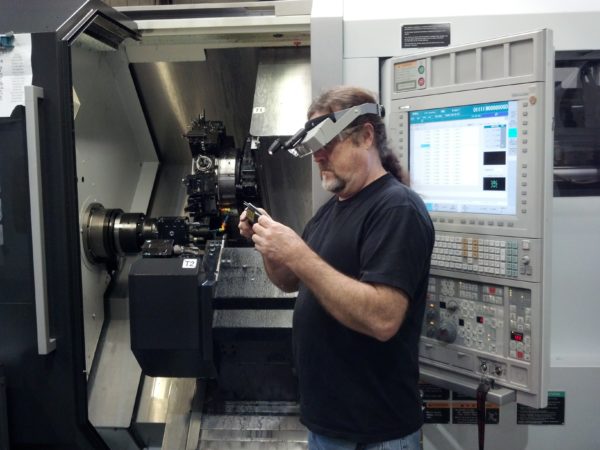
Read More >> Read More >> See the Pro Tips Archive for past issues. >> You can also subscribe to the Pro Tips newsletter here. >> Part of the Month: Every month we feature a really cool part that we have made. February's Part of the Month is a steel coupler. With only two small connection points to each end, this coupler will allow angular displacement and flex between the parts on each end as it rotates. This is a good example of a part that can be made complete on one of our mill/turn lathes.
Feedback and Suggestions:
If you have any questions about topics in this newsletter or any ideas for a topics in future Pro Tips please email us - .(JavaScript must be enabled to view this email address). You can also leave comments about any newsletter at the bottom of the online version. For questions, Email us .(JavaScript must be enabled to view this email address) For RFQs, Email us .(JavaScript must be enabled to view this email address) |
|
Pro CNC Inc · 445 Sequoia Dr. Suite 113 · Bellingham, WA 98226 |